Review:
Ursula K. Le Guin’s work “The Ones Who Walked Away From Omelas” does a great job at describing how justice is interpreted within a “nomos” framework. When Le Guin writes, “They all know it is there, all the people of Omelas. Some of them have come to see it, others are content merely to know it is there. They all understand that their happiness… depends wholly on this child’s abominable misery” to represent how, within this normative universe, happiness is dependent on the eternal suffering of a child. If the child stops suffering, then the people who live in the town of Omelas will stop experiencing happiness. In the story, it is known that the majority of people have come to accept the fact that this child must suffer in order for their town to keep flourishing, yet it is made clear that some people have taken steps to leave the town, as they do not agree that the child’s suffering is justified. This shows how justice within a nomos is only valid if enough people agree upon the circumstances they have put upon themselves. The acceptance of this child’s suffering establishes their happiness, and changing this will affect the societies nomos in a negative manner, those who leave the town accept this nomos as being wrong and decide to abandon their town, even if it means they will not be happy anymore. It illustrates how even an established nomos can have flaws, and if everyone does not agree upon the circumstances of that nomos, then some are forced to find a better path for themselves outside of this specific nomos. The work itself also reflects how our real world functions. In our real world, we know certain nations have to suffer in order for us to have the standard of living that we are used to. Omelas serves as a metaphor of our world and raises the question: Is the suffering of people a necessary evil for us to experience happiness?
Review #2:
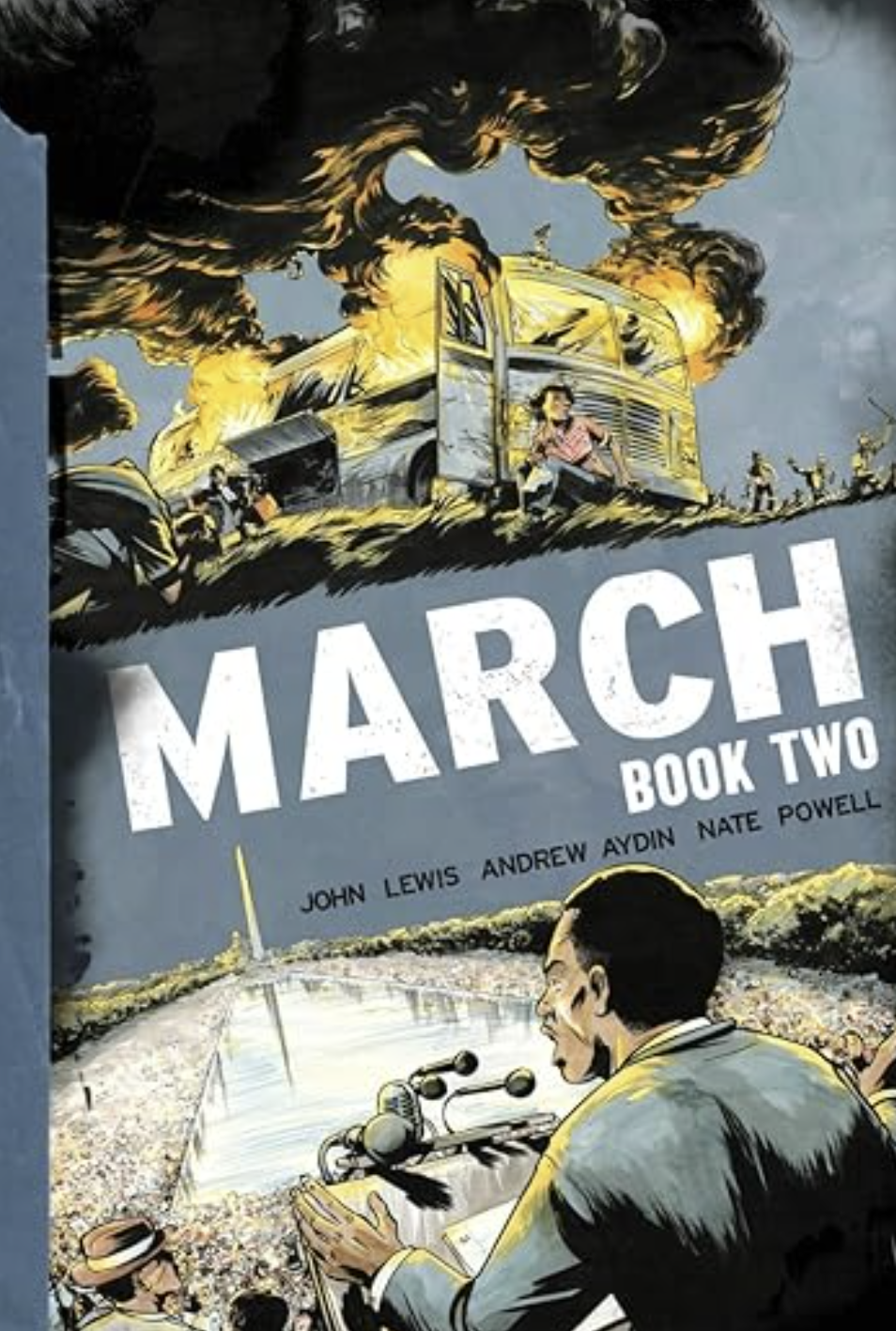
Personally, March: Book Two by John Lewis and Nate Powell delivers a powerful look at the Civil Rights Movement, and how it combines historical events with that of a narrative. The book covers major events such as the Freedom Rides, the Birmingham campaign, and the March on Washington, yet they are not presented as simple events in history. Instead, it shows them as lived experiences that were deeply shaped by human fear and exhaustion but also hope, which were all especially present during this time era. The comic’s format plays an important role in this where the fact that the book contains artwork rather than simply words on a page allows it to capture both the brutality of segregationist violence but also the determination of the activists. In this way, we are able to see what the people go through while being members of the movements. At the same time, the narrative does raise questions about justice, such as what it requires, how it is pursued, and what sacrifices may be crucial to achieve it. It shows that justice is not just about changing laws but also about tackling systems built on intimidation and inequality. It does this by highlighting how nonviolent resistance required a large amount of discipline and the willingness to face danger for what promotes social equality. The book also reveals the existence of internal tensions within the movement, showing debates over leadership and strategies that remind the readers that achieving justice is extremely complex and can be a very messy process. I think one of the book’s greatest strengths however is that it portrays how several average people during this time era took the steps into acquiring roles that are both not easy to fulfill but also potentially dangerous to their wellbeing. This display shows what courage looks like in real life. Overall, I believe March: Book Two succeeds as both an effective historical narrative and a reflection on the continuous struggle for justice that one day may fully be achieved for the better and benefit of everyone.
